Friday, December 4, 2015

DNA Extraction Lab Conclusion

In this lab we asked the question of: How can DNA be separated from cheek cells in order to study it? My hypothesis was: Swish Gatorade around in mouth, scrape the insides of your cheek, spit it back in the cup, put it in a test tube, add pineapple juice, add sugar, add detergent, shake it six times, then slowly pour alcohol into the test tube. After pouring the alcohol into the test tube, small clumps of DNA rose to the top with the alcohol. The detergent, sugar, and juice was protease to lysis the DNA, being catabolic. This result happened because the juice, sugar, and detergent helped the DNA come out, and the alcohol was made the DNA float up.
While our hypothesis was supported by our data, there could have been errors due to the amount of detergent or juice we put in, because the drops could vary in sizes. In future experiments, measuring out the liquid before pouring it in would be easier. Also, while swishing the Gatorade, people could have swished the Gatorade for different amounts of time, causing more or less cheek cells to come off. We could have had a timer to be more exact next time.
This lab was done to demonstrate the steps and process to extract DNA. From this lab, I learned how to get DNA from my cells, which helps me understand how DNA works inside the cell. Based on my experience from this lab, I understand how polar and nonpolar substances can separate other substances.Displaying 20151202_142357.jpgDisplaying 20151202_142357.jpg

Tuesday, November 24, 2015

Unit 4 Reflection

This unit was about genetics, and what makes us human. It was about DNA and RNA, and how our genes are passed on from our parents. I understood the Punnett square the most, while meiosis was a bit confusing. I learned how I got my genes and traits, and what parent gives which traits. The infographic helped me because I had to research and find many things, so I read more information about the topic. 
My  scores from the VARK website were:
Visual 10 , Aural 2 , Read/Write 5, Kinesthetic 10
My results were expected because I took a test similar to this before. I can usually learn better when I see someone do it or do it myself.  I can practice other other forms of studying that I'm not as strong in to help me get better.


Wednesday, November 18, 2015

Coin Sex Lab

In this lab, we flipped coins to demonstrate how meiosis works. Alleles are randomly chosen in recombination to determine the genes of the offspring. The coins acted as the alleles, the opposite sides being chosen as we flipped them. We could determine the probability of certain traits by using a punnett square. For Sex of Offspring, we expected 50% to 50% for having a male or female. The coins we flipped represented x-linked inheritance, because it determined the sex of the child. We got what we expected, because five out of our 10 flips were girl, and five were boys. For autosomal dominance, we predicted 50 percent of the 10 children would be bipolar. This represented autosomes. We got 5 children would have bipolar disorder, what we predicted, Bb, heterozygous, meant a bipolar individual. bb, homozygous, meant that the child was healthy. The Dihybrid cross- Looking at two traits together demonstrated diybrid crosses, as opposed to a monohybrid cross, which is the inheritance of a single trait. Most of our results were almost exact with our predictions. Using probability will never be 100% sure, because mutations can happen. In my life, I could use this if I ever have children and want to see what traits they could get.

Infographic

https://magic.piktochart.com/output/9066050-science-in-genetics

Monday, October 19, 2015

Unit 3 Reflection

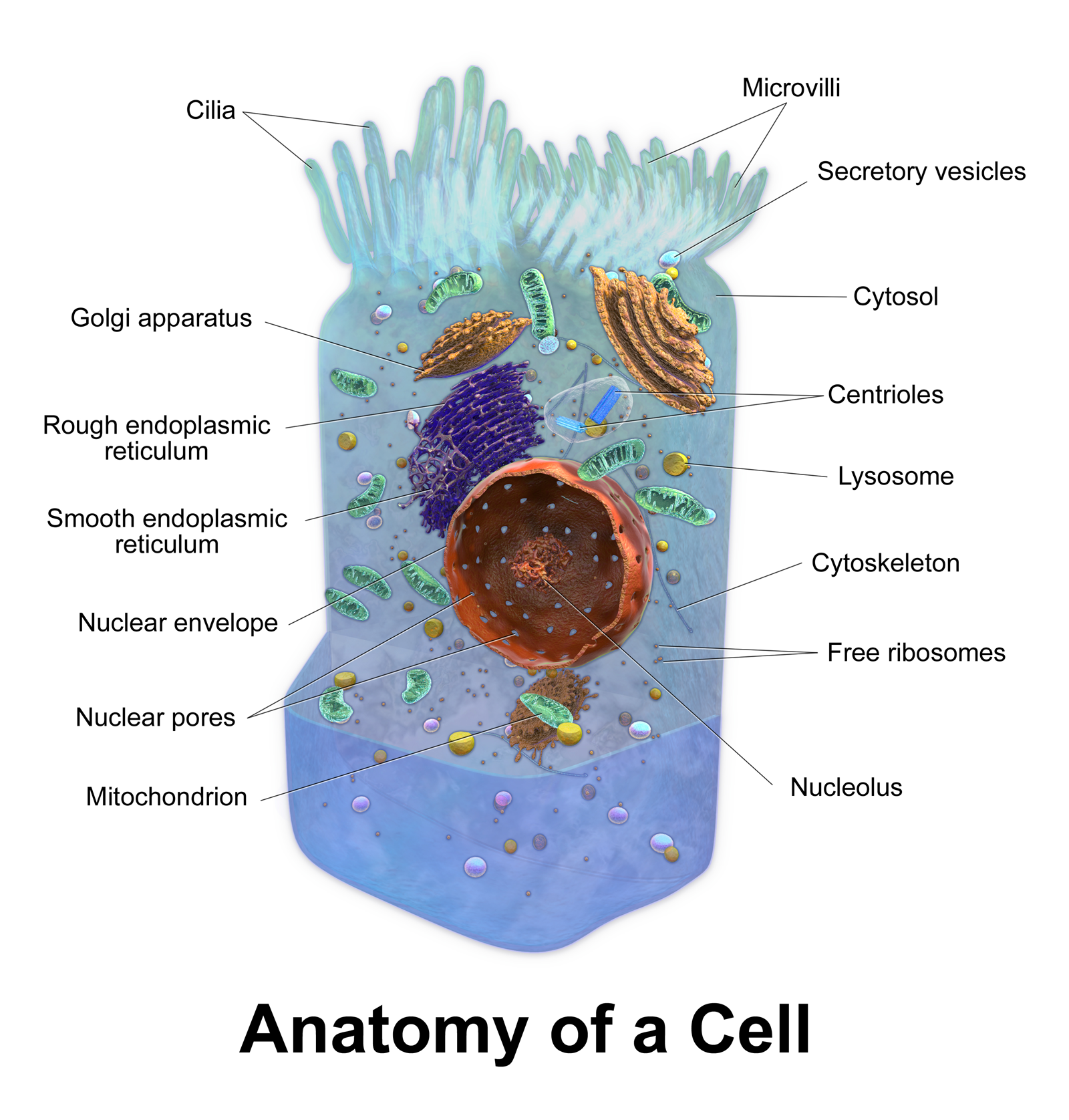
Unit three was about cells. The chapters inside it were: cell structure and function, photosynthesis, cellular respiration, and cell growth and division. In chapter 7 section 1, the main idea was the cell theory and the two main types of cells, prokaryotes and eukaryotes. In chapter 7 section 2, the main idea was to learn about the different organelles inside a cell, and what each one does. In chapter 7 section 3, the main idea was about the cell membrane and cell wall, and how things go in and out from diffusion and osmosis. In chapter 7 section 4, it talked about how cells are meant to do different things, and the four levels of organization. In chapter 8 section 1, it explained what plants use for their source of energy, and what ATP does for the plant cell. In chapter 8 section 2, it talked about what led to the discovery of photosynthesis, and the photosynthesis equation. In chapter 8 section 3, it described in detail the cycles, reactants, and products of photosynthesis. In chapter 9 section 1, it described glycolysis and fermentation. In chapter 9 section 2, it described the Krebs cycle and electron transport chain. In chapter 10 section 1, it talked about about how a cell produces by cell division. In chapter 10 section 2, it talked about the main events of the cell cycle, and the four phases of mitosis. In chapter 10 section 3, it talked about how a cell regulates cell division, explains how cancer cells are uncontrollable.
My strengths in this unit were understanding the basic process of photosynthesis and where it happens. I understood the cycles and how it takes energy from the sun to make glucose. The diagram we copied down in class helped me visualize the process. My weaknesses were understanding the cellular respiration process, because I don't completely where and how some things are happening. Also, I have can't remember all of the organelles of a cell's names and functions.
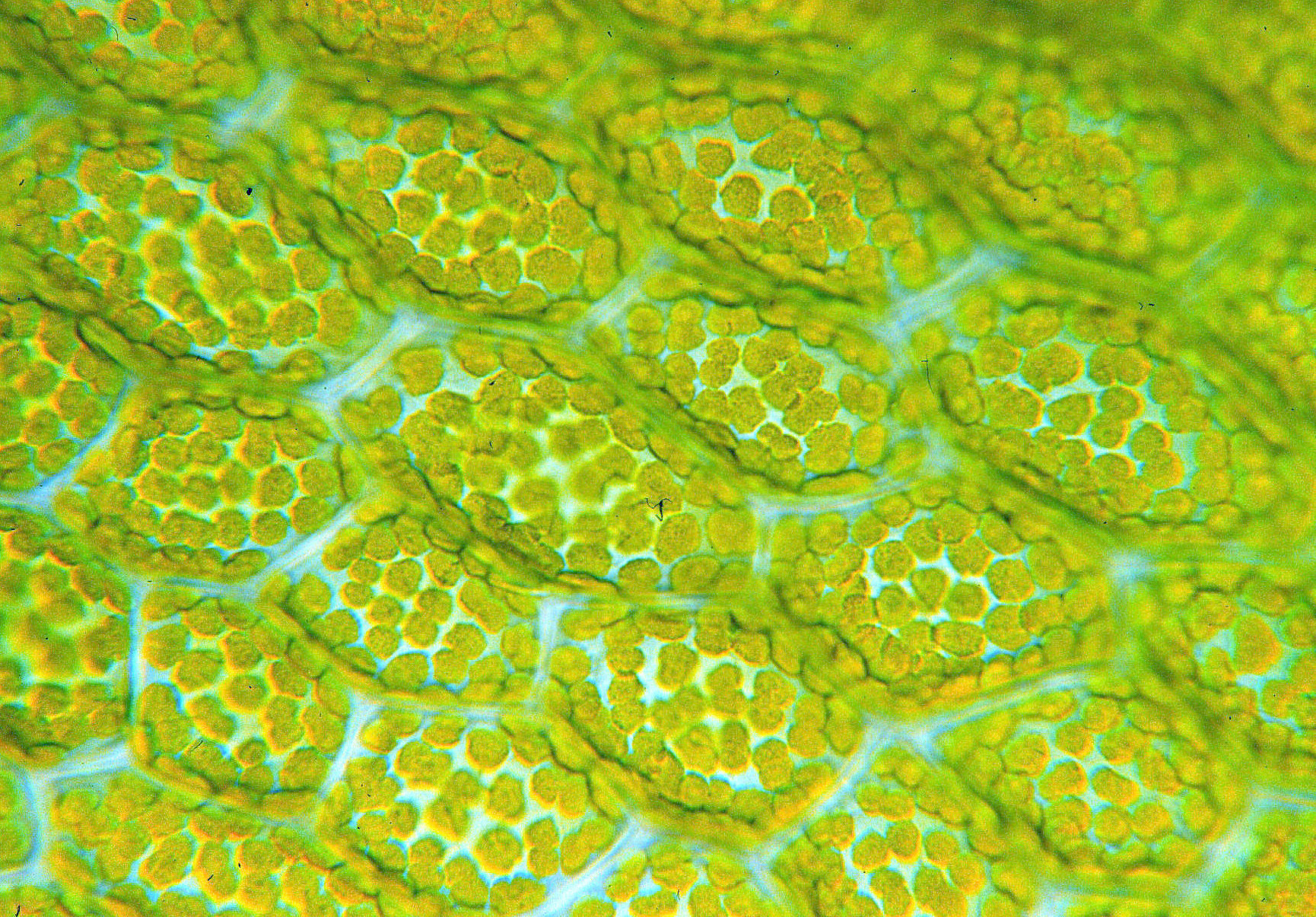
From these experiences, I've seen part of the microscopic world from our lab of looking at different types of cells.  I also know what is happening inside my body as I exercise. I want to learn more about cells and what kinds of different cells there are. I also want to see different kinds things under the microscope. I am planning to study for the test by reading over my notes and review the textbook. I will also look at the end of the chapter questions.

Wednesday, October 7, 2015

Egg Diffusion Lab

In this lab, we put two vinegar-soaked eggs into corn syrup and deionized water. We measured the circumference and mass of each egg before and after putting the eggs into the water and corn syrup.The egg in deionized water shrunk less than one gram. The egg in deionized water shrank to over less than half its original size. The average of the change in mass was 1.8%, showing that the egg's mass slightly increased. This shows that more water diffused inside the cell, having more solute. The average of the egg's circumference was 4.3% showing it also slightly increased in size. For the egg in corn syrup, the average change in mass was -47.25% showing that the egg almost shrank to half its normal size. The circumference decreased by -22.94%, showing that there was a bit of empty space inside the egg's membrane. This shows that the sugar water has less solute that the egg, so the solutes had diffuse out of the cell, making the egg smaller. The corn syrup was a hypertonic solution, while the deionized water was a hypotonic solution. When we put the egg in vinegar, the vinegar dissolved the shell, then started to act as a hypotonic solution because of the water inside the vinegar.This caused the egg to expand a bit. When we put the egg into water, the egg  stayed at about the same size. When one of the eggs was put into corn syrup, the egg shriveled because solute was being diffused out of the egg membrane from high concentration to low concentration. 
In class, we learned about passive diffusion and how diffusion goes from high to low. In real life, we cannot drink salt water. This is because the salt inside the water would take the water from our body, and make us even more thirsty or even dehydrated. In markets, vegetables are sprinkled with water so they stay looking fresh and big, so they won't look small and shriveled up. In the future, I would want to test what would happen if I replaced the egg with a tomato. Would the same things happen to the tomato?
Group #1234567AVG
(DI Water)
% Change in Mass
N/AN/A0.74%0.37%0.45%N/A6.95%1.80%
(DI Water)
% Change in Circumference
N/AN/A1.20%1.70%0%N/A14.37%4.30%
(Sugar Water)
% Change in Mass
-46.70%-52.80%-52.60%-49.70%-41.75%-39.58%-47.70%-47.25%
(Sugar Water)
% Change in Circumference
-22.40%-18.75%-26.30%-26.60%-32.35%-21.21%-13%-22.94%

Monday, October 5, 2015

Egg Cell Macro Molecules Lab

In this lab, we asked the question of "Can macro-molecules be identified in an egg cell?". I found that egg membrane, egg yolk, and egg white had polysaccharides, proteins, and lipids. I thought that egg yolk would have lipids and monosaccharides, egg membrane would have proteins and polysaccarides, and egg white would have protein and polysaccharides. But the results were different. For monosaccharides, only the egg yolk and egg white had monosaccharides, the egg membrane didn't. We knew that the egg white and egg yolk both had monosaccharides when we added Benedicts solution, and they both turned dark and light green. We knew that the egg membrane didn't have monosaccharides because after adding Benedicts solution, the egg membrane turned light blue. We knew that egg membrane, egg yolk, and egg white all had polysaccharides because they all turned shades of black when we added iodine. When we added sodium hydroxide, the egg membrane. yolk, and white all turned purple. The egg yolk turned dark purple, and the egg membrane was light purple. Sudan III turned egg membrane and egg white into a shade of pink and orange. It turned egg yolk completely orange, proving that there were lipids inside them. The result was likely caused by the fact that monosaccharides, polysaccharides, proteins, and lipids, were inside the egg membrane, egg yolk, and egg white.
Our data was unexpected because we could have had bits of egg white with egg yolk, and egg white with the egg membrane. This could have made the indicators change color because there was some different part of the egg part, making it think the macromolecule was present. Due to these errors, in future experiments I would recommend gently putting the cell membrane into water before testing, and letting all of the egg white out before putting the egg yolk down, making the chance of egg white interfering less. Also, our data was unexpected from the recording of color. If a color was very dark brown, someone might write black, and dark pink might be red. In future experiments, I would recommend having a reference sheet of colors to look at, to match the closest color.
This lab was done to demonstrate how different parts of an egg are like a cell. From this lab, I learned what macromolecules are in different parts of the egg, which helps me understand the concept of a cell. Based on my experience from this lab, I could know what to eat for each macromolecule.